
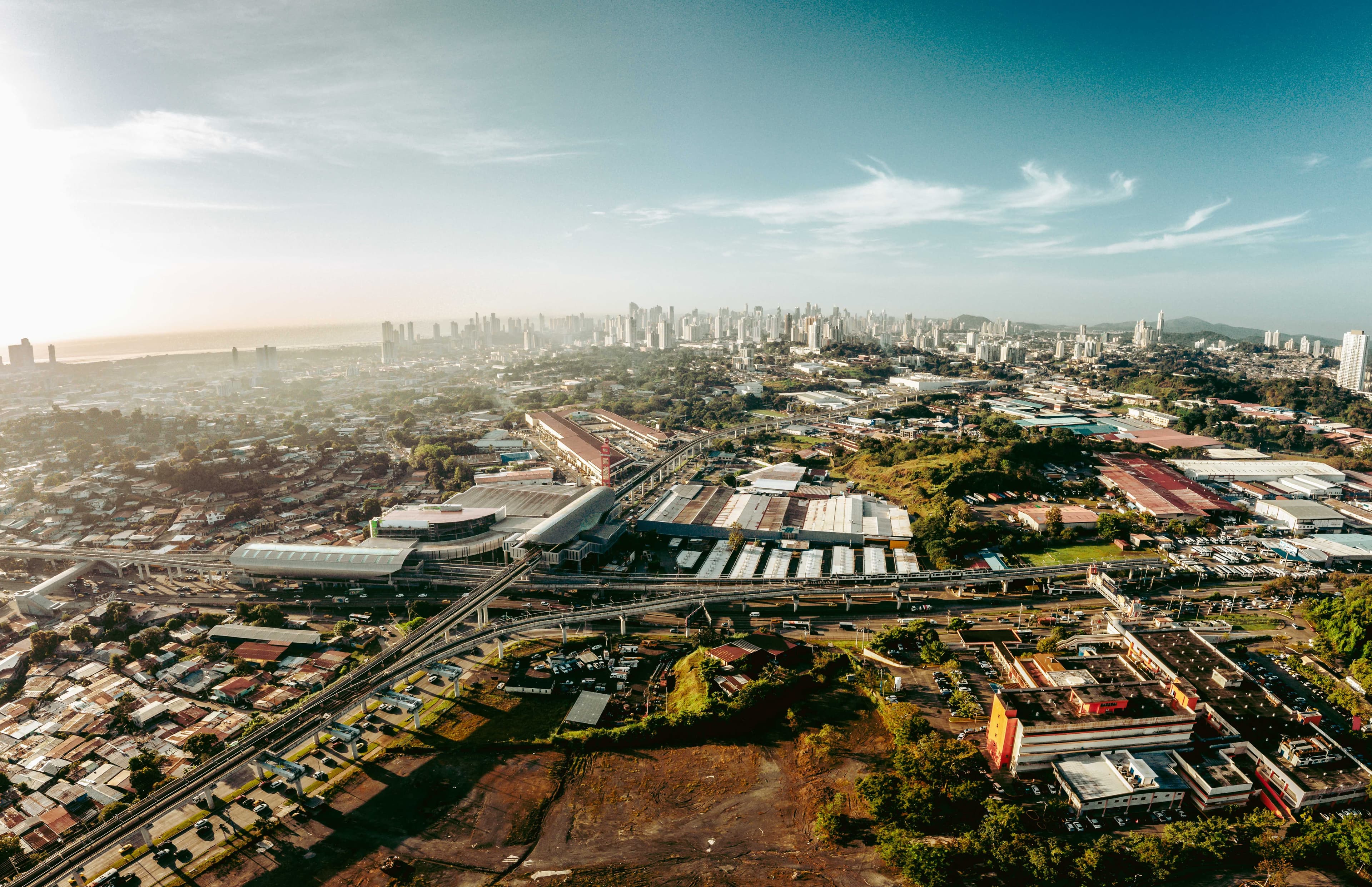
Tocumen and Juan Díaz: Panama's East Side in Full Growth
Tocumen and Juan Díaz are the areas on the east side of Panama City with the most active real estate growth right now. More accessible prices, master-planned projects, proximity to the airport, and rising demand are turning them into a real alternative to the established central areas. This guide explains what's happening, who it makes sense for, and what you need to know before buying.
Tocumen and Juan Díaz: Panama's East Side in Full Growth
While Panama's real estate market debates price per square meter in Costa del Este, Santa María, and Punta Pacífica, there's another growth corridor that went relatively unnoticed for years and that by 2026 can no longer be ignored: the eastern corridor that connects Juan Díaz with Tocumen. Two districts (corregimientos) of the Panama district that, over the last decade, went from peripheral areas with a reputation for basic affordability to hubs of active real estate development, with master-planned projects, growing local demand, and prices that still allow you to get in before appreciation fully sets in.
This guide explains what's happening in these areas, why they're growing, who it makes sense for to live or invest here, and what real limitations you should know before committing.
Where they are and how they relate to each other
Juan Díaz and Tocumen are two adjacent districts located on the east side of the Panama district, along the corridor that follows the Corredor Sur highway and the road to Tocumen leading to the international airport. Their geographic position makes them the first natural ring of the city's expansion beyond Costa del Este, which is reaching the limit of its available land.
Juan Díaz borders Costa del Este — one of the city's most sought-after neighborhoods — to the west, and Tocumen to the east. That adjacency to Costa del Este is one of the reasons Juan Díaz began attracting development before other areas on the east side: anyone who can't afford Costa del Este prices but wants to be close to its infrastructure, schools, and corporate services finds in Juan Díaz the most logical alternative.
Tocumen, for its part, is internationally known as the home of Tocumen International Airport — the most important air hub in Central America and the Caribbean. But beyond the airport, Tocumen is a district undergoing full residential transformation, with affordable and mid-range housing projects that are attracting families looking for real square footage at prices the city center no longer offers.
Why these areas are growing now
The growth of Juan Díaz and Tocumen isn't accidental or isolated. It responds to a convergence of factors that, in 2026, are all active at the same time:
Saturation of the established eastern areas. Saturation in traditional areas like Punta Pacífica and Costa del Este is pushing growth toward areas with more accessible prices, greater land availability, and projects that still have room to develop. Juan Díaz is the most immediate natural recipient of that overflow, given that it shares a border with Costa del Este and has direct access to the Corredor Sur.
Tocumen International Airport as an economic engine. Passenger traffic at Tocumen International Airport exceeds 25 million annually, driving demand for both short- and long-term rental properties in the area. Pilots, flight attendants, airport staff, executives in transit, and tourists who arrive and stay a few days generate a housing demand around the airport that no other part of the city has.
Improved road infrastructure. Strong growth in Tocumen is driven in part by steady improvements in road infrastructure and the expectation of metro projects, which are generating high appreciation expectations in these areas. Access to the Corredor Sur from Juan Díaz and Tocumen significantly cuts commute time to the city center compared to a decade ago.
Unmet demand from the local middle class. The housing shortage for Panama's middle class is the single most important structural problem in the country's real estate sector. Juan Díaz and Tocumen, with lower entry prices than the established areas, are where developers are finding the widest pool of unmet demand: Panamanian families who want a decent home in a planned project, with access to basic services, at a good price.
Juan Díaz: from pass-through area to residential destination
The transformation of Juan Díaz over the last decade is one of the clearest cases of how planned urban expansion can change an area's profile in a relatively short time. Over the past decade, the Juan Díaz district has become the focus of major real estate development, with large housing projects that have led to a significant increase in population and, as a result, in commerce.
What Juan Díaz has that no other affordable area can offer to the same extent is direct adjacency to Costa del Este. That means access to the same corporate services, international schools, medical centers, and shopping centers as Costa del Este without paying Costa del Este prices. For a family with children in an international school, or for an executive working at one of the multinationals in the area, living in Juan Díaz and working in Costa del Este is an equation that makes complete sense.
The Los Pueblos Mall — one of the largest in Panama — is in Juan Díaz and brings together stores, supermarkets, restaurants, movie theaters, and universities. That commercial hub is an anchor of services that has historically sustained residential demand in the area and will continue to do so as new projects develop around it.
The Juan Díaz area maintains active demand in the residential segment, with buyers who are no longer looking for just a traditional home but a complete experience: planned communities with private security, amenities, parks, sports areas, and nearby services like supermarkets, hospitals, and schools. That demand profile is being met by developers betting on the master-plan model precisely in this area.
Tocumen: beyond the airport
Tocumen's identity has historically been dominated by the airport, to the point that many Panamanians don't think of Tocumen as a residential area but as a transit zone. That perception is changing, though more slowly than in Juan Díaz.
The airport is simultaneously the biggest advantage and the biggest limitation of living in Tocumen. The advantage is obvious: for anyone who travels frequently for work, living less than ten minutes from the international terminal is a real convenience that no other area of Panama City can replicate. An executive who travels two or three times a month can recover significant hours of productive time per year simply from proximity to the airport.
The limitation is also obvious: aircraft noise. The areas closest to the airport have noise levels that aren't compatible with certain lifestyles, especially along approach and takeoff routes. Areas farther from the terminal within the Tocumen district are less affected, but it's worth verifying the specific situation for each project before committing.
What Tocumen consistently offers are some of the lowest entry prices on Panama City's east side, planned residential projects with full amenities, and a services infrastructure that has grown significantly in recent years to serve the local population and airport staff and their associated companies.
Property prices in Juan Díaz and Tocumen
The price differential between these areas and the established eastern areas is the fundamental reason they attract demand. In 2026, the approximate ranges are:
| Property type | Juan Díaz | Tocumen | Reference: Costa del Este |
|---|---|---|---|
| 1-bedroom apartment (60–80 m²) | $80,000–$140,000 | $65,000–$120,000 | $180,000–$280,000 |
| 2-bedroom apartment (90–130 m²) | $120,000–$220,000 | $100,000–$180,000 | $260,000–$470,000 |
| House in a master-plan project | $180,000–$400,000+ | $150,000–$320,000 | Not available (no houses) |
| Price per m² (reference) | $1,300–$1,800 | $1,100–$1,600 | $2,600–$3,500+ |
That 40%–60% differential in price per square meter compared to Costa del Este is what turns Juan Díaz and Tocumen into real options for buyers the central-east market has already priced out. The preferential interest rate, available for a first new home up to $300,000, applies to a good portion of the price range in both areas, which makes the equation even more favorable for the local buyer.
The master-plan model: what's being built
The trend most defining the development of Juan Díaz and Tocumen in 2026 is the master-plan development model: fully planned communities where housing, services, amenities, and public spaces are designed from the ground up as a complete ecosystem.
That model responds exactly to what Panama's middle-class buyer is looking for: private security with an access-controlled gatehouse, underground wiring, green areas and parks integrated into the project, a pool, a gym and sports facilities, and proximity to supermarkets, schools, and basic services. All of that within an entry price significantly lower than equivalent projects in more established areas.
The largest-scale projects in Juan Díaz are aiming their offering at the $150,000–$350,000 range, which is where the most active local demand sits and where the preferential interest rate can still apply for many buyers. The model of houses within gated communities is especially popular in this segment, given that land availability in these areas still allows for horizontal (low-rise) construction that's no longer possible in the city center.
Who it makes sense to live here
Middle-class Panamanian families looking for real space. The biggest draw of Juan Díaz and Tocumen for the local buyer isn't the location but the real square footage they can get for their budget. A family that could buy a 90 m² apartment in Obarrio can, in Juan Díaz, access a 150 m² house in a gated community for a similar price. That difference in space and housing type — house vs. apartment — is decisive for families with children.
Airport staff and logistics companies. Pilots, aviation technical staff, airline employees, and staff from air cargo and logistics companies operating in Tocumen find this area the most practical location for their work routine. For someone working irregular shifts or early mornings, proximity to the airport has a real comfort value that more than compensates for the lower prestige of the address.
Investors with a five-to-ten-year horizon. For the investor looking to get in before appreciation fully sets in, Juan Díaz and Tocumen offer a window that's still open. Juan Díaz's adjacency to Costa del Este and the progressive improvement of infrastructure in Tocumen are the factors that have historically preceded sustained appreciation in emerging areas. Anyone buying today under these conditions is buying before, not after, that appreciation plays out.
Buyers who don't qualify for central-area price ranges. With prices starting at $80,000 for one-bedroom apartments and $120,000 for two-bedrooms, Juan Díaz and Tocumen serve a segment of buyers the established eastern areas have already priced out. For that profile, these areas aren't the second choice — they're the one that makes financial sense.
The limitations you should know about
Traffic can be severe during rush hour. The road to Tocumen and the access points to the Corredor Sur from Juan Díaz carry significant traffic during the morning and afternoon. If your job is in the financial center and you leave at 7:30 a.m., the commute can take between 30 and 60 minutes depending on the day and your specific starting point. Check actual commute times during work hours, not weekend times.
The supply of high-end services is limited. Unlike Costa del Este or San Francisco, Juan Díaz and Tocumen don't have the density of high-end restaurants, health and wellness boutiques, or premium services that characterize the more established areas. Basic services — supermarkets, pharmacies, clinics — are present and improving, but the level of convenience offerings is lower than in more mature areas.
Uneven project quality. Rapid growth attracts both serious developers and lower-quality projects that take advantage of demand without meeting proper construction standards. Due diligence on the developer — track record of deliveries, financial solidity, existence of a trust (fideicomiso) — is especially important in these areas, where market regulation and oversight is less intense than in more established areas.
Airport noise in parts of Tocumen. Areas directly under the airport's approach routes have noise levels that can be significant, especially in the early morning. Not all of Tocumen is equally affected, but it's a factor that should be verified specifically for each project based on its exact location.
Public services infrastructure still developing. In some sectors of Tocumen, public services infrastructure — water, sewage, electricity — is still being consolidated. Master-plan developments resolve this with their own infrastructure, but for properties outside those developments, it's a factor worth verifying.
Frequently asked questions about Tocumen and Juan Díaz as residential options
Is it safe to live in Juan Díaz or Tocumen in Panama?
Safety varies significantly by specific sector within each district. Master-plan projects with a security gatehouse and a controlled perimeter have safety levels comparable to any gated community in other parts of the city. Older, less planned areas face the same security challenges as other peripheral areas of Panama City. The choice of specific project matters more than the name of the district.
How long does it take to get from Juan Díaz to the financial center?
Under normal conditions outside rush hour, between 15 and 25 minutes via the Corredor Sur. During morning rush hour (7:30–9:00 a.m.) it can stretch to 35–60 minutes depending on the specific point in Juan Díaz and the destination in the center. Tocumen, being farther east, adds another 5 to 15 minutes to those times.
Is it worth investing in Juan Díaz or Tocumen for rental income?
The profitability profile is different from that of established areas. The gross yield can be similar or higher given the lower purchase price, but tenant demand is more local and less corporate than in Costa del Este or Marbella. For long-term rentals aimed at middle-class Panamanian families, there's real and sustained demand. For executive corporate rentals, there are more suitable options in other areas.
Do projects in Juan Díaz qualify for the preferential interest rate?
Many do, since the price range of projects in Juan Díaz frequently falls within the thresholds for the preferential rate on a first home (up to $300,000 in 2026). Check with the bank and the specific developer whether the property you're interested in qualifies, since it depends on the exact price and type of project.
What's the difference between buying in Juan Díaz vs. Tocumen?
Juan Díaz has more mature development, a better range of services, and the advantage of adjacency to Costa del Este. Tocumen has lower prices, greater land availability, and the unique advantage of airport proximity. For someone who doesn't work at the airport or travel frequently, Juan Díaz usually offers a more comfortable day-to-day living equation. For someone who works at the airport or its associated companies, Tocumen may be the most practical option available in the city.
Panama's east side is under construction, literally
Tocumen and Juan Díaz are today what Costa del Este was twenty years ago: areas in active construction with prices that don't yet fully reflect what they'll be once infrastructure and services finish consolidating. The difference is that in 2026 that consolidation is happening much faster than before, driven by demand pressure that the central areas can no longer absorb.
For the buyer who prioritizes space over address, and for the investor looking for appreciation before it happens, these areas offer a window that won't stay open indefinitely. Panama's east side is growing on real data: projects that are selling, families that are moving in, and services that keep arriving. That's not speculation — it's the normal process of urban expansion in a city in sustained growth.